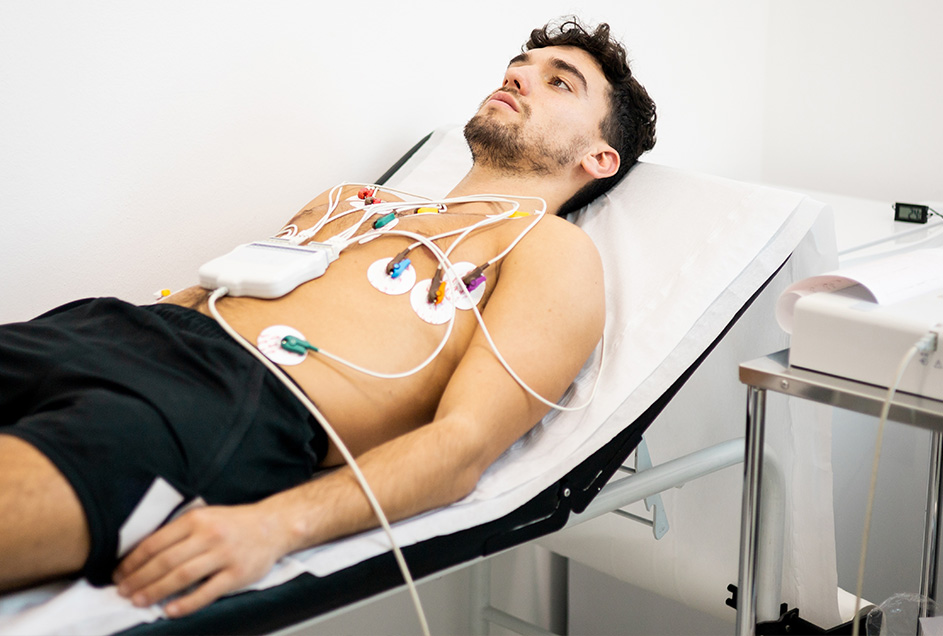
In Australia, the estimated prevalence of POTS is 0.2-1%, but it is likely that many of these individuals are undiagnosed. POTS testing with a cardiologist can confirm the cause of your symptoms and get you the right treatment to restore your quality of life.

POTS is an uncommon condition characterised by tachycardia (an abnormally rapid heartbeat) when standing upright, which improves when lying down. It is caused by a dysfunction of your autonomic nervous system, which is responsible for regulating functions such as blood pressure and heart rate.
Other POTS symptoms exacerbated by standing can include:
You may also have POTS-related symptoms that are unaffected by your posture, such as poor sleep, brain fog and concentration problems, gastrointestinal issues, sensory sensitivities, and a low tolerance for intense activities.
The symptoms of POTS can vary from individual to individual and may come and go. These symptoms are not unique to POTS, and many people with POTS may be initially misdiagnosed with another condition such as anxiety or a panic disorder.
Unfortunately, it can take years to reach an accurate diagnosis and receive effective treatment for POTS, with an average of 5-6 years between first experiencing symptoms to receiving the right diagnosis. With increasing awareness of this condition among Australian healthcare professionals in recent years, more people living with POTS are being referred for targeted POTS testing, giving them access to treatments that can restore their daily function and quality of life.
POTS is defined by sustained elevated heart rate (tachycardia) when standing upright without a significant decrease in blood pressure (hypotension). As a chronic condition, your symptoms must be persistent for at least three months for a POTS diagnosis to be considered.
When assessing you for POTS, your cardiologist will take a detailed medical history and discuss your symptoms. To support a diagnosis of POTS, we can perform the active stand test at one of our three Sydney cardiology practices, or refer you to a reputable clinic for the tilt table test.
The active stand test for POTS is a simple investigation that measures your heart rate and blood pressure while standing versus lying down.
While lying on a bed in the clinic, your cardiologist will measure your heart rate and blood pressure to set baseline values and a point of comparison. You will then be asked to stand upright, and your heart rate and blood pressure readings will be taken again, every minute for 10 minutes. While standing, it’s important to remain as still as possible to avoid interfering with the results by talking, walking, or fidgeting.
In addition to measuring your heart rate and blood pressure, your cardiologist will also monitor you closely for objective signs of POTS, such as sweating or shaking.
An increase in heart rate of at least 30 beats per minute (or 40 beats or more for adolescents), in the absence of a significant drop in blood pressure immediately after standing up, can point to a POTS diagnosis.
The tilt table test requires more specialised equipment in the form of a motorised table that can tilt you upright rather than requiring you to stand on your own. While the active stand test is the usual first-line method of investigating POTS, your cardiologist may refer you for the tilt table test if these results were borderline or inconclusive. The tilt table test may also be preferred if the active stand test is not safe for you, such as if you are prone to fainting.
During the tilt table test, you are strapped to a motorised table. Your blood pressure and heart rate are measured as you lie on the table in a horizontal position. These measurements are taken again as the table is tilted into an upright, vertical position. Because you are not using your own leg and torso muscles to stand up, the effect of muscle activity on regulating your blood circulation does not interfere with the readings during the tilt table test.
Though the tilt table test may be able to detect more subtle types of autonomic dysfunction, it is more costly and less accessible than the active stand test, and is not necessary to diagnose POTS. Your cardiologist will advise you whether or not the tilt table test is recommended for you.
Your cardiologist may perform additional investigations to rule out other conditions that present with similar symptoms to POTS. With our comprehensive cardiac imaging and monitoring services, all of these tests can be undertaken at our clinic without needing referral elsewhere.
These can include:
At Harbourside Cardiology, our team is dedicated to providing holistic, patient-centred care that aligns with the most recent clinical guidelines and research. We are with you every step of your health journey, providing continuity of care of all heart conditions from initial assessment through to treatment and recovery.