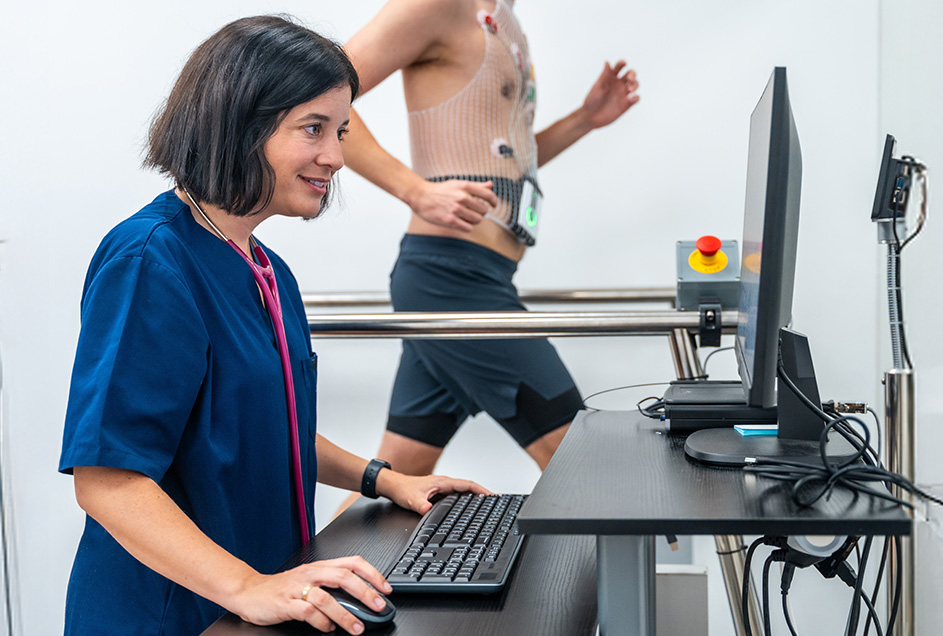
Echocardiography is a diagnostic ultrasound scan used to provide valuable information about your heart’s structure and function. We offer both transthoracic and stress echocardiography on-site at Harbourside Cardiology, with expert interpretation and reporting by our cardiologists.
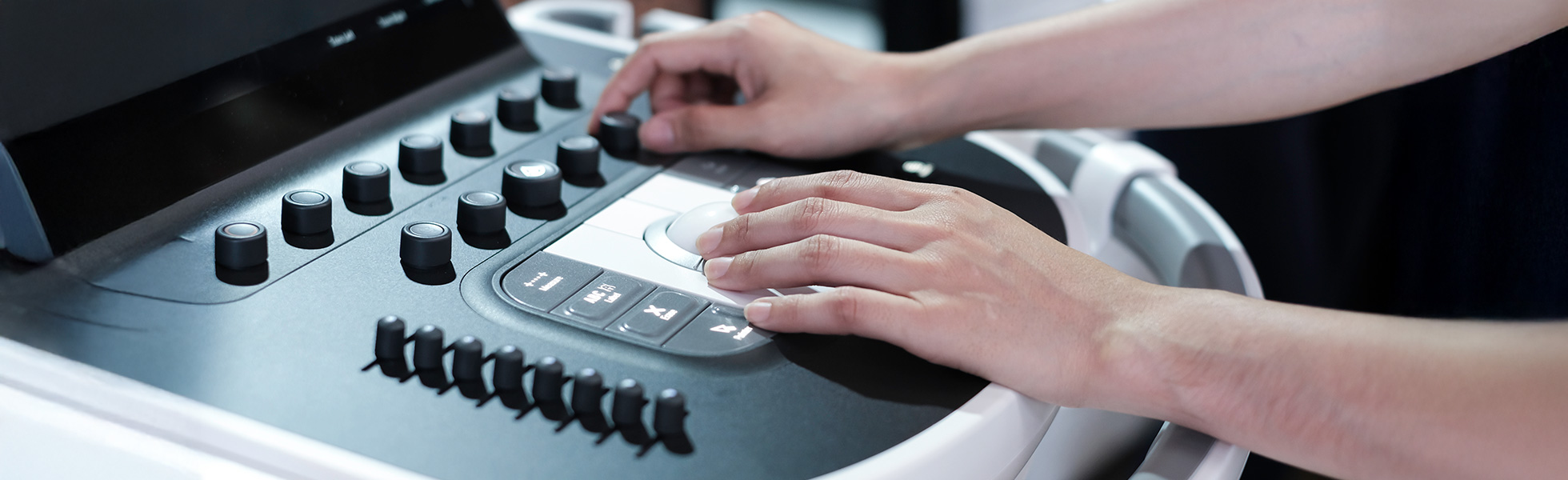
Echocardiography is a non-invasive imaging technique using high-frequency soundwaves to assess the size, structure, and function of your heart in real time. This specialised cardiac ultrasound allows your cardiologist to visualise:
There are a few different types of echocardiograms, which are useful in different circumstances:
A standard transthoracic echocardiogram is non-invasive and painless, and takes around 20-30 minutes. A conductive ultrasound gel is applied to your skin as you lie on the procedure bed, and the ultrasound wand will be moved across different areas on your chest and neck. To improve the quality of the image, your clinician may ask you to shift into different positions, slow your breathing, or briefly hold your breath.
A 3-lead electrocardiogram (ECG) is often combined with a transthoracic echocardiogram to provide concurrent information about your heart rate and rhythm.
Stress echocardiography is designed to assess your heart’s performance when under physical exertion. An initial baseline echocardiogram is taken of your heart then compared to the echocardiogram performed after exercise, providing information about blood supply to your heart muscle, valve function, and pressure changes in the heart in response to stress. The exercise stress test typically involves exercising on a treadmill at gradually increasing speed until you reach your peak heart rate.
Similar to a transthoracic echocardiogram, stress echocardiography is non-invasive with the ultrasound wand passed over your chest, and is often combined with ECG monitoring. A stress echocardiogram takes around 20-30 minutes.
In select cases, transoesophageal echocardiography is used to provide a more detailed view of certain parts of the heart that cannot be obtained with the transthoracic method. A flexible ultrasound probe is passed through your mouth and oesophagus (food pipe), capturing clearer images of your heart without interference from your ribcage or lungs. A transoesophageal echocardiogram is useful for accurately diagnosing congenital heart defects, clots, valve dysfunction, and infections.
This minimally-invasive diagnostic procedure is performed in hospital under sedation by our cardiac imaging subspecialist, and is usually complete within 40 minutes.
An echocardiograph, also known as an echocardiogram, may be required if your cardiologist suspects you have cardiac disease, or if more information about your heart structure and function is needed to guide your treatment in the case of known cardiac disease.
You may need an echocardiogram if:
You are asymptomatic but have a family history of a heart condition in a first-degree relative
You have signs or symptoms of heart disease, such as palpitations, fainting, or shortness of breath
You have known heart failure or valvular disease that needs reevaluation to guide treatment
You have stable angina and suspected coronary artery disease
If you are having a standard transthoracic echocardiogram, no specific preparation is required. You may eat and drink as normal leading up to your appointment, however, be aware that you will be lying down for a period of time, which may be uncomfortable on an overly full stomach. Your specialist may also recommend avoiding certain medications just before your test as they may interfere with the results.
As you will likely have an ECG simultaneously with your echocardiogram, we recommend avoiding any skin products on your neck or chest as this makes it difficult to attach the ECG electrodes.
Transthoracic echocardiography can be performed on-site at Harbourside Cardiology, with specialist interpretation and reporting of results by our experienced cardiologists.
As you will be exercising on a treadmill as part of your stress test, we recommend wearing appropriate clothing and footwear. There are no specific requirements around fasting or fluid intake for a stress echocardiogram, but be mindful that a large meal just before your exercise stress test may cause discomfort. Your specialist may also recommend you avoid taking certain medications on the day of your test if they have the potential to interfere with your heart rate results.
To help the ECG electrodes adhere properly to your skin, we recommend avoiding applying lotions, oils, or creams to your neck and chest area, including sunscreen, cosmetics, and moisturisers.
We offer stress testing on-site at Harbourside Cardiology, with close supervision and subsequent interpretation and reporting of results by our cardiologists.
At Harbourside Cardiology, our team is dedicated to providing holistic, patient-centred care that aligns with the most recent clinical guidelines and research. We are with you every step of your health journey, providing continuity of care of all heart conditions from initial assessment through to treatment and recovery.