Blood pressure monitoring and electrocardiograms (ECGs) provide us with important information about the state of your cardiovascular system, and can be used for diagnosis and to monitor the effects of treatment. At Harbourside Cardiology, we offer specialist oversight for Holter monitoring, ambulatory blood pressure (ABP) monitoring, and 12-lead ECG.

24-hour ABP monitoring is a non-invasive technique using a small, portable blood pressure monitor with an arm cuff. The monitor pack can be clipped to your belt or waistband, or be worn in a pouch under your clothes. The cuff is fitted around your upper arm, and inflates at intermittent intervals throughout the day and night, with the blood pressure (BP) reading recorded by the monitor. Your cardiologist will program the device to automatically inflate as required; typically, this is every 20-30 minutes during waking hours and hourly overnight.
After your ABP monitoring is complete, these data are interpreted by your cardiologist and discussed at a review appointment. The monitor will provide a report including:
Our BP fluctuates throughout the day, influenced by factors such as stress, sleep, exercise, whether you’re lying or standing, the time of day, and even whether you have a full bladder. A measurement taken in a doctor’s office only provides a small snapshot of your BP and heart rate at that moment in time. Conversely, 24-hour BP monitoring gives a more comprehensive and reliable picture of your blood pressure and heart rate as you go about your usual daily activities.
ABP monitoring is currently the gold standard for diagnosing hypertension, and is also useful for reliably predicting future cardiovascular events through plotting your entire 24-hour BP profile.
The advantages of ABP monitoring include being able to:
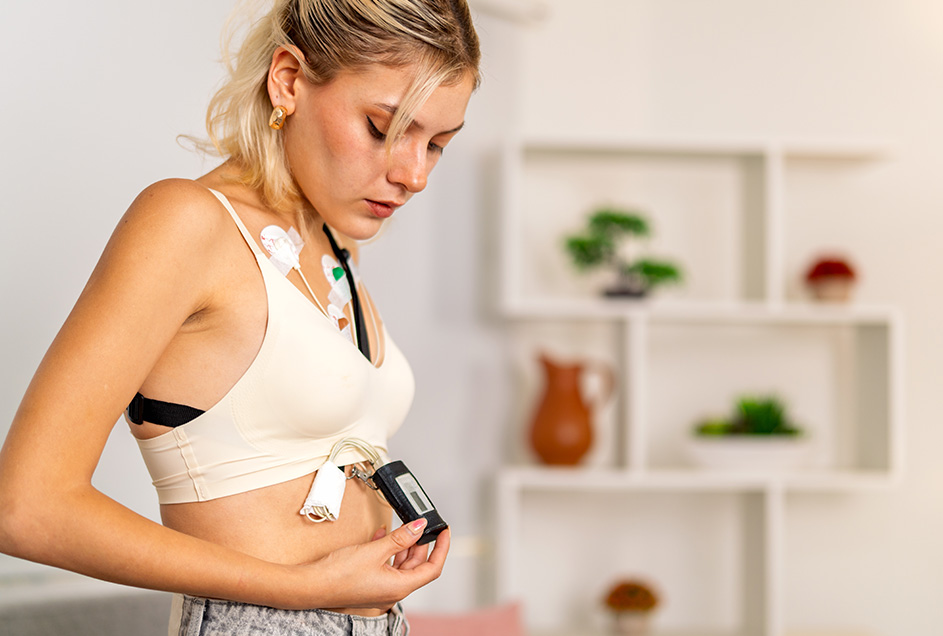
Holter monitoring is a type of portable ECG, designed to record your heart’s electrical activity (rhythm) over a longer period of time than can be captured in the clinic with a regular ECG. The monitor is small and unobtrusive. You will have three electrodes placed on the skin on your chest, which continuously record the electrical activity of your heart then send these data to the monitor. Your cardiologist may advise you to wear the Holter monitor anywhere from 24 hours up to a week. You may also be asked to keep a diary of your daily activities and any symptoms, so that this can be correlated to your Holter monitor report.
This heart rhythm information is used to:
Arrhythmia conditions such as atrial fibrillation (a disorganised, quivering heart rhythm), tachycardia (rapid heart rate), bradycardia (slow heart rate), and premature ventricular contractions, can sometimes be missed during a standard in-clinic ECG.
In some cases, a mild and temporary irregularity in your heart rhythm is not problematic. In other cases, undiagnosed or untreated arrhythmia can lead to or be associated with:
In addition to its diagnostic uses, Holter monitoring also gives your cardiologist valuable insight into how your arrhythmia treatment is performing, so that the right adjustments to your treatment plan can be made accordingly.
12-lead electrocardiography is a common, non-invasive test used to investigate abnormal heart activity. This test is performed in the clinic at Harbourside Cardiology, with expert interpretation by your cardiologist. You will have electrodes attached to your skin, predominantly around your chest, attached to the ECG monitor. These electrodes read the electrical activity of your heart. An ECG is safe and painless, though a small minority of people may experience some skin irritation from the adhesive used to attach the electrodes.
An electrocardiogram is the result of the ECG test, displayed as a trace showing peaks and troughs. Normal heart activity follows a specific pattern; a deviation from this may indicate a current heart problem or an impending problem. An ECG may be recommended if you are experiencing symptoms that indicate a cardiac condition, including:
Your doctor may also recommend having an ECG if you are asymptomatic but have risk factors for heart disease.
Understanding the patterns of your heart’s electrical activity can diagnose a number of serious conditions. An ECG can identify the underlying cause of any symptoms, confirm a suspected diagnosis, and enable timely treatment.
An ECG can be used to investigate and diagnose:
The data from an ECG reading can also provide information about the effectiveness of certain cardiac treatments such as a pacemaker or medications, and may also be used to monitor your recovery after a heart attack.
At Harbourside Cardiology, our team is dedicated to providing holistic, patient-centred care that aligns with the most recent clinical guidelines and research. We are with you every step of your health journey, providing continuity of care of all heart conditions from initial assessment through to treatment and recovery.